Caring for Boomer Parents: What HR Needs to Know About FMLA for Elder Care
For U.S. employers and small-business HR teams.
#fmla for aging parents#qualifying serious health condition elder care#paid family leave california parent care
Fact-Checked & Regulatory AuditVERIFIED E-E-A-T
Verified by AI SoloHR Compliance & Editorial Team (U.S. Employment Law & Regulatory Compliance Research Group)
Last Audit: Sep 9, 2026 03:12
Caring for Boomer Parents: What HR Needs to Know About FMLA for Elder Care
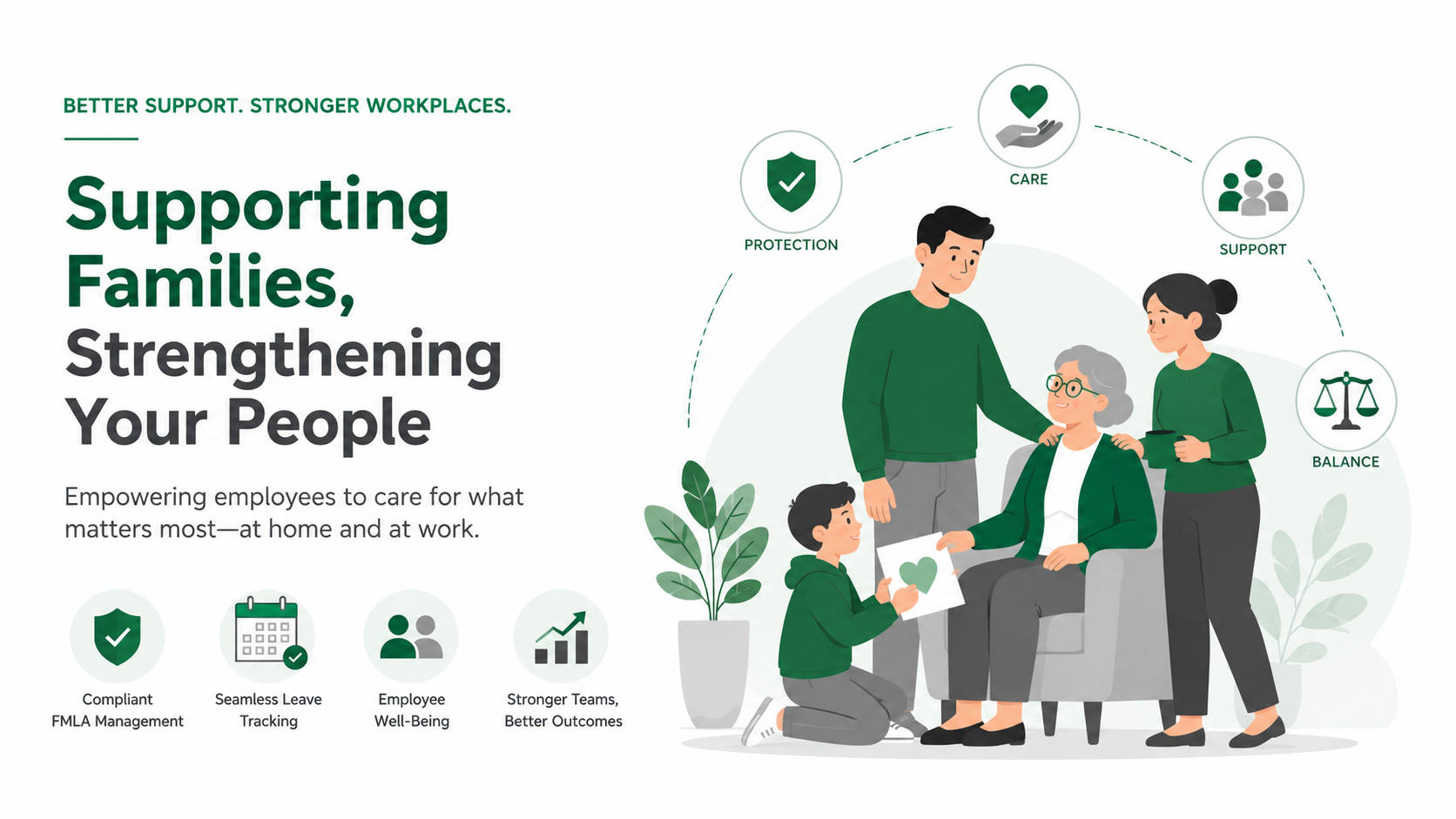
The demographics of the American workforce are shifting rapidly. In 2026, a vast number of employees find themselves squeezed between the demands of raising children and caring for aging Baby Boomer parents. This demographic is often referred to as the "Panini Generation," and their need for family caregiver leave is rising.
For HR professionals, elder care FMLA requests present unique challenges. Unlike maternity leave or surgery recovery, elder care needs are often unpredictable, involving intermittent call-outs, transport to doctor appointments, or sudden medical crises.
If your managers are complaining about employees taking frequent time off to care for their parents, you must understand the legal parameters of FMLA elder care to protect your company from compliance audits.
🛠️ HR Compliance Alert: Intermittent elder care leave requires precise tracking to prevent compliance errors. Download our free
Sources and review notes
This article is written for U.S. small-business HR teams in 2026 and should be checked against your own policy, state requirements, and counsel guidance before use in a contested employment decision. AI SoloHR provides workflow structure, reviewed drafting support, and educational resources; it does not provide legal advice or make final employment decisions.
Statutory Sources & Regulatory Citations
This compliance document references official regulatory guidance from federal employment enforcement agencies:
to learn how to track caregiver case timelines safely.
The Rise of the 'Panini Generation' in the 2026 Workforce
Managing caregiver leave requires clear compliance paths. If a manager reacts to a caregiver request with frustration, the company can quickly face a lawsuit.
The California Consulting Firm Elder Care Gotcha
In early 2026, a senior analyst at a California-based consulting firm requested intermittent leave to care for their 78-year-old mother, who suffered from severe dementia. The analyst needed to take off 2 days every week to manage medical transitions and home care arrangements.
The division manager, frustrated by the disruption to client meetings, complained that caregiving was a "personal issue" rather than a medical emergency, and HR denied the request because the mother did not live with the analyst. The analyst resigned and filed a complaint with the California Civil Rights Department.
The firm faced a major audit and was forced to settle for $110,000. The court noted that FMLA and state leaves protect caring for a parent regardless of their residence, and denying the request was a direct violation of employment law.
Why Elder Care Leaves Are Surging
The aging Boomer population means that more employees are taking on caregiving roles. Under federal law, eligible employees have a right to up to 12 workweeks of unpaid, job-protected leave in a 12-month period to care for a parent with a serious health condition.
FMLA Qualification: What Counts as a 'Serious Health Condition'?
To administer elder care leave properly, HR must verify that the parent's health status meets the statutory definition of a "serious health condition."
Inpatient Care: Any overnight stay in a hospital, hospice, or residential medical facility.
Chronic Conditions: Illnesses (such as Alzheimer's, Parkinson's, or severe arthritis) that require periodic treatments by a health care provider.
Incapacity: Conditions that prevent the parent from performing basic daily activities (eating, hygiene, dressing) or require ongoing medical supervision.
The employee does not need to be the sole caregiver. They can take FMLA leave to share caregiving duties with other siblings or professional nurses.
The 'In Loco Parentis' Rule (Who Qualifies as a Parent?)
The FMLA protects leaves taken to care for biological, adoptive, step, or foster parents.
Crucially, it also applies to individuals who stood in loco parentis to the employee when the employee was a child. If an employee was raised by their grandmother or an uncle, they are entitled to take FMLA leave to care for that individual, even if no formal legal adoption occurred. HR may ask for a simple administrative statement confirming the in loco parentis relationship.
State-Level Overlaps: The California CFRA and PFL Matrix
For employers with staff in California, compliance is more complex due to local state laws.
How CFRA Expands FMLA Elder Care Rights
The California Family Rights Act (CFRA) mirrors the federal FMLA in many ways but expands the definition of family members. Under the CFRA, employees can take job-protected leave to care for:
Parents-in-law.
Grandparents and grandchildren.
Siblings.
This means that while an employee might not be eligible under federal FMLA to care for a father-in-law, they are protected under the CFRA, and California employers must track this leave accordingly.
Coordinating Unpaid Protected Leave with Paid Family Leave Benefits
While FMLA and CFRA provide job protection, they do not provide income. However, California's Paid Family Leave (PFL) program provides partial wage replacement (up to 8 weeks in 2026) for employees taking time off to care for a seriously ill parent.
HR must coordinate these programs, ensuring that the unpaid job protection runs concurrently with the state PFL benefits to prevent leave stacking.
How to Manage Caregiver Case Timelines Automatically
Elder care leaves are notoriously difficult to track on spreadsheets due to the intermittent nature of the absences.
Transitioning to a centralized leaf tracking platform eliminates the risk of compliance errors. AI SoloHR automatically tracks employee FMLA usage, cross-references California CFRA/PFL rules, monitors certification return windows, and provides managers with compliance guidance. This ensures your team stays fully protected while supporting employees through family transitions.
Frequently Asked Questions
Can you take FMLA to care for a parent-in-law?
Under federal FMLA rules, parent-in-law care is not covered. However, several states have expanded these definitions. For example, in California (under the CFRA) and in Oregon, employees have a job-protected right to take leave to care for a parent-in-law. Always check local state laws before denying a request.
What counts as 'providing care' under FMLA regulations?
"Providing care" is defined broadly. It includes providing physical assistance (such as feeding or dressing), administering medication, transporting the parent to doctor appointments, and providing psychological comfort and reassurance to a parent receiving medical treatment.
Legal Disclaimer
This article is for educational and informational purposes only and does not constitute formal legal advice. HR professionals and business owners should consult with a qualified employment attorney to evaluate specific FMLA compliance scenarios in 2026.