Verified by AI SoloHR Compliance & Editorial Team (U.S. Employment Law & Regulatory Compliance Research Group)
Last Audit: Sep 7, 2026 04:25
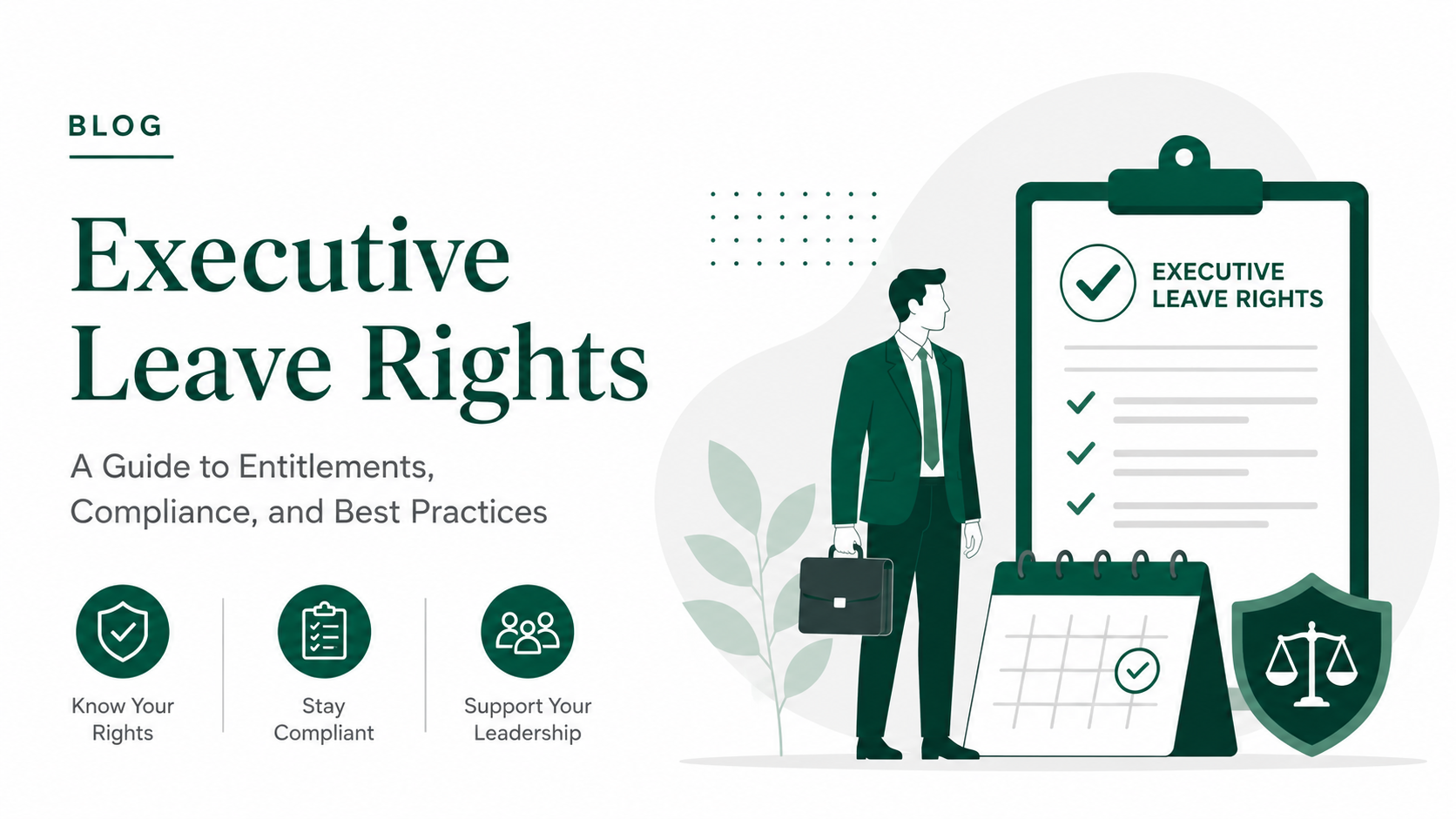
The FMLA Key Employee Exemption: What It Actually Means (And Why It Doesn't Deny Leave)
When a high-level executive or a key technical specialist requests FMLA leave, the business disruption can be severe. If your Chief Financial Officer requests eight weeks of leave right before a major year-end audit, or if your sole lead software developer needs time off during a product launch, the impact on operations is immediate.
In these high-pressure situations, employers often look for legal exemptions. They might discover the FMLA’s "Key Employee" rule and assume it allows them to deny the request.
For HR departments in 2026, acting on this assumption is a dangerous move. The Key Employee exemption is one of the most misunderstood rules under federal employment law, and getting it wrong carries significant legal liability.
🛠️ HR Compliance Alert: Managing critical executive absences requires strict documentation. Use our FMLA & LOA Tracking Checklist
Sources and review notes
This article is written for U.S. small-business HR teams in 2026 and should be checked against your own policy, state requirements, and counsel guidance before use in a contested employment decision. AI SoloHR provides workflow structure, reviewed drafting support, and educational resources; it does not provide legal advice or make final employment decisions.
Statutory Sources & Regulatory Citations
This compliance document references official regulatory guidance from federal employment enforcement agencies:
to draft compliant legal notices, evaluate employee status, and ensure you remain fully audit-protected.
The Executive Leave Trap: A Costly Misconception
The most important thing for HR professionals to understand is that the FMLA Key Employee status is not an exemption from taking leave. It is purely an exemption from job restoration.
The Logistics Company Audit Gotcha
Consider a real case that occurred in early 2026 involving a regional logistics company. The Chief Financial Officer suffered a severe leg fracture and requested eight weeks of continuous FMLA leave.
Because the company was undergoing a critical fiscal audit, the CEO designated the CFO as a "key employee" and verbally denied the request, telling the CFO that the business would suffer irreparable financial harm without their presence. The CFO felt pressured, delayed treatment, and subsequently sued the company.
The court ruled against the employer. The judge noted that the company had committed FMLA interference because no employer has the right to deny the taking of FMLA leave to any eligible worker, regardless of how vital their role is. The company was ordered to pay back wages, emotional distress damages, and legal fees.
What is an FMLA 'Key Employee'?
Under the DOL FMLA guidelines, a key employee is defined by three strict parameters:
Salaried Status: The worker must be salaried (exempt or non-exempt under the FLSA). Hourly workers can never be designated as key employees.
Top 10 Percent: The employee must be among the highest-paid 10 percent of all salaried and non-salaried employees (both eligible and non-eligible under FMLA) within a 75-mile radius of the worksite.
FMLA Eligible: The employee must meet standard FMLA eligibility criteria (12 months of service and 1,250 hours worked).
To determine if an employee falls into the top 10 percent, HR must calculate the employee’s year-to-date earnings (including bonuses and premium pay) at the time the leave is requested.
The Legal Realities of Reinstatement vs. Taking Leave
If you cannot deny a key employee their FMLA leave, what does the exemption actually do? The rule applies solely to reinstatement at the conclusion of their leave.
Why Key Employees Can Still Take Leave
An eligible key employee is entitled to the full 12 weeks of unpaid, job-protected FMLA leave. During this period, the employer must also maintain their group health insurance benefits under the same conditions as if they had continued working.
The exemption only comes into play if restoring the employee to their previous position would cause substantial and grievous economic injury to the company's operations.
Defining 'Substantial and Grievous Economic Injury'
The legal standard for "substantial and grievous economic injury" is exceptionally high.
It is not defined by the cost of hiring a temporary replacement or the general inconvenience of the employee’s absence.
The employer must prove that restoring the employee would threaten the very economic survival of the organization or cause long-term, devastating financial harm.
For example, if a company is forced to hire a permanent replacement CFO at a high salary to secure a critical bank loan that prevents bankruptcy, restoring the returning CFO might meet this standard.
Even in this extreme scenario, the burden of proof rests entirely on the employer, and courts in 2026 evaluate these claims with intense scrutiny.
Step-by-Step Notification Rules for HR
If an employer intends to deny restoration to a key employee, they must follow a highly technical, written notification process. Failing to follow these steps invalidates the exemption.
Identify Top 10% Salaried Status: Verify if the employee is salaried and within the highest-paid 10 percent within a 75-mile radius.
Issue Written Warning Notice: Provide written notification immediately upon leave request, detailing their status and restoration risks.
Offer Immediate Return Opportunity: Provide a reasonable chance for the employee to return to work immediately to secure their job restoration.
Rule 1: Immediate Written Warning
The employer must notify the employee in writing at the time the FMLA leave is requested (or as soon as leave begins, if the request is unexpected) that they qualify as a key employee.
This notice must explain:
That the employee is designated as a key employee.
The potential consequences regarding job restoration.
The employer’s determination that restoration will cause substantial and grievous economic injury.
If HR fails to deliver this notice immediately, the company loses the right to deny reinstatement at the end of the leave, even if grievous injury can be proven.
Rule 2: The Right to Return Immediately
The key employee notice must give the employee a reasonable opportunity to return to work immediately after receiving the warning.
If the employee chooses to continue their leave after receiving the notice, the employer must still maintain their health insurance. At the end of the leave, the employee has the right to request reinstatement. The employer must re-evaluate the circumstances to see if grievous economic injury still exists before making the final decision to deny restoration.
How to Manage Executive Absences Safely in 2026
Relying on the key employee exemption is a high-risk compliance strategy. The safest path for small and growing businesses is to establish a cross-training framework and temporary coverage plans.
Using our automated compliance management platform, HR teams can safely log high-level absences, generate compliant written notifications, track benefit contributions, and establish coverage tasks. This structured workflow ensures that when an executive takes leave, the company’s operations remain secure and legal liabilities are eliminated.
Frequently Asked Questions
What is the threshold for 'substantial and grievous economic injury'?
There is no fixed dollar amount. The DOL evaluates this on a case-by-case basis. It must be an injury that severely impacts the core business operations (such as the loss of a major contract that would cause mass layoffs or company closure), rather than the mere cost of hiring temporary staff.
Can you replace a key employee while they are on leave?
Yes. An employer can hire a permanent replacement for a key employee during their FMLA leave if business survival requires it. However, at the end of the leave, the employer must still evaluate whether restoring the employee to an equivalent position would cause grievous injury. If an equivalent position is available, restoration cannot be denied.
Legal Disclaimer
This article is for educational and informational purposes only and does not constitute formal legal advice. HR professionals and business owners should consult with a qualified employment attorney to evaluate specific FMLA compliance scenarios in 2026.